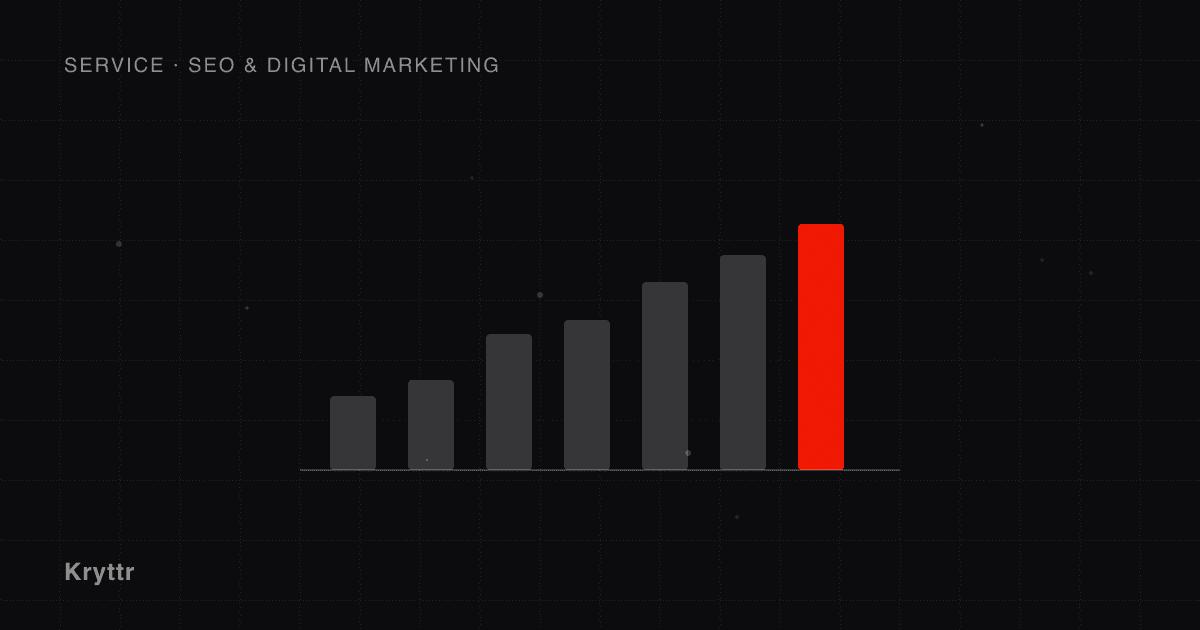
A ranking is not a business outcome
SEO reporting tends to stop at the metric that's easiest to show progress on: position. Rank #1 for a relevant keyword looks like unambiguous success in a monthly report. But rank and revenue are only loosely correlated, and a business can climb to the top of a results page while its actual lead or sales numbers stay completely flat — a gap that's uncomfortable to explain if the reporting never measured anything past position in the first place.
Where the gap usually comes from
Keyword-intent mismatch: ranking for a term that gets searched a lot but doesn't represent someone ready to buy or contact a business
A landing page built to rank rather than to convert, dense with keyword-targeted content but thin on the actual next step
Page experience issues — slow load, intrusive layout shifts, poor mobile usability — that undo the trust a high ranking is supposed to signal
No tracking connecting organic traffic through to actual leads or revenue, so the disconnect stays invisible until someone asks the right question
Reporting on the metric that matters
The fix starts with reporting differently, not just optimizing differently. Position should be a leading indicator on the way to a report on organic-driven leads, calls, or sales — not the final line. Once that visibility exists, it usually becomes obvious whether the content strategy is actually targeting commercial intent or just chasing search volume.
How we run SEO engagements
We tie every keyword target back to a business outcome before writing a page for it, and we build conversion tracking into the SEO work itself rather than treating it as a separate analytics project. Ranking is the visible part of the work. Whether it's connected to revenue is the part we actually get held accountable for.